
|
Quantity
|
Total
|
||
|
|
|||
|
|
|||
Metal Milling Machines for Workshops and Production
Vertical, horizontal, universal, benchtop, and CNC models for precise machining of metal parts.
Vertical Models Universal Machines Benchtop Solutions CNC Equipment Service and Selection
Precise Metal Machining
Metal milling machines are used for machining flat surfaces, grooves, shoulders, slots, chamfers, faces, and complex profiles on metal workpieces.
Solutions for Different Tasks
The catalog includes equipment for repair shops, tool rooms, small-batch production, and full-scale industrial machining.
Options for Different Workflows
Available models include traditional manual machines, universal machines, and CNC milling machines for automated repetitive operations.
Selection and Support
Hoper Trade helps you choose equipment, tooling, and consumables based on workload, accuracy requirements, and the type of parts you produce.
Metal Milling Machines: Features and Applications
Metal milling machines are essential equipment for workshops and industrial facilities where precise mechanical machining of workpieces is required. They are used for roughing and finishing operations, surfacing, groove cutting, shoulder machining, slotting, recessing, chamfering, and other processes needed for manufacturing machine components, repair parts, and structural elements.
Such equipment is used for machining steel, cast iron, non-ferrous metals, and alloys. The choice of a specific model depends on the type of parts, workpiece dimensions, required accuracy, and expected production volume. That is why before you buy a metal milling machine, it is important to consider not only the core specifications, but also the actual production tasks it will handle.
A metal milling machine can be used both for one-off part production and for serial manufacturing. Compact and universal models are suitable for smaller workshops, while more rigid industrial solutions or CNC milling machines are often preferred for stable production cycles.
Suitable Applications
- Milling flat surfaces, faces, and shoulders.
- Producing grooves, slots, mounting seats, and recesses.
- Machining housings, plates, flanges, and tooling elements.
- Preparing parts for further drilling, grinding, or assembly.
- Performing serial machining operations on CNC models.
- Use in repair shops, machine shops, and production departments.
Types of Milling Machines
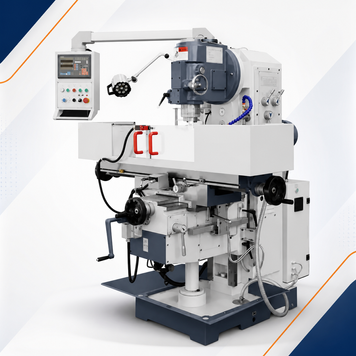
Vertical milling machines are suitable for machining different surfaces and performing a wide range of operations. They are convenient for using end mills, form cutters, and cylindrical cutters while providing accurate tool positioning and good visibility of the working area.
Horizontal milling machines are a practical choice when stable machining with disc and cylindrical cutters is required. These models are suitable for production processes where output and repeatability are important.
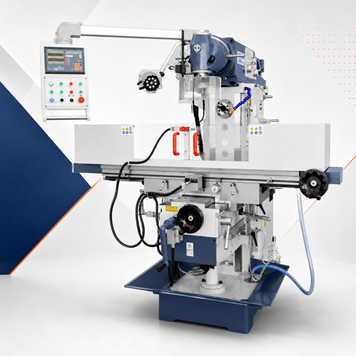
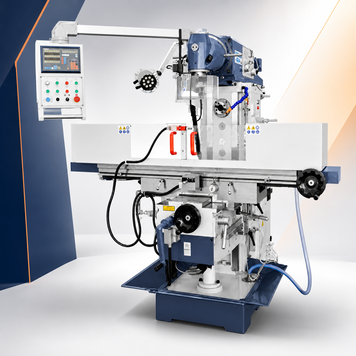
Universal milling machines provide greater flexibility for machining different types of parts because the working area can be adapted to a variety of tasks. This makes them a practical choice for companies with changing product ranges.
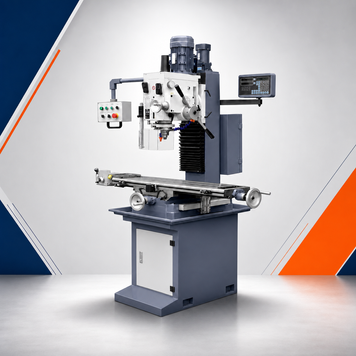
Drilling and milling machines combine several functions in one piece of equipment and are suitable for workshops where saving floor space matters without sacrificing basic metalworking capabilities.
Benchtop milling machines take up less space and are suitable for machining small parts, repair work, prototype work, and training purposes.
CNC milling machines are designed for production automation, precise repetition of operations, and machining along complex tool paths. They help increase productivity, reduce human-factor errors, and improve serial production efficiency.
Design Features
- Rigid machine frame to reduce vibration during metal machining.
- Precision guideways for stable axis movement and repeatable results.
- Worktable adjustable to the machining type and workpiece dimensions.
- Spindle unit designed to work with different types of milling cutters.
- Manual or automatic feeds depending on the machine configuration.
- Compatibility with additional tooling, accessories, and support devices.
- On CNC models, software-based control for serial and complex contour machining.
How to Choose a Milling Machine
To choose the right metal milling machine, it is important to define the type of future work: what materials will be machined, what dimensions the workpieces have, what accuracy is required, and what load the machine will handle during operation. For one-off or small-batch production, a universal model is often sufficient, while for intensive production it is better to consider an industrial milling machine or a CNC machining center.
The characteristics that most affect performance include motor power, spindle speed range, table dimensions, axis travel, spindle type, feed accuracy, frame rigidity, and coolant system availability. Service support, spare parts availability, and compatibility with tooling and consumables are also important factors.
Prices for Metal Milling Machines
The price of a metal milling machine depends on the equipment type, working dimensions, accuracy class, power, configuration, and level of automation. Benchtop and compact models usually have a lower entry budget, while universal industrial machines and CNC equipment are designed for more demanding production tasks and heavier workloads.
If you need to compare several options by specifications and price, Hoper Trade specialists will help you choose the most suitable solution without overpaying for unnecessary features.
Why Customers Choose Hoper Trade
- We help select milling machines based on specific production tasks.
- We supply equipment, tooling, and consumables for metalworking.
- We provide консультації щодо запуску, підключення та подальшої експлуатації.
- We work with customers across Ukraine and organize delivery.
- We support the equipment selection process based on workload, accuracy, and budget.
Frequently Asked Questions
What tasks are metal milling machines suitable for?
These machines are used for machining flat surfaces, grooves, shoulders, chamfers, slots, faces, and complex profiles on metal parts.
Which type of milling machine is better for a workshop?
For smaller workshops, benchtop, drilling-milling, or universal models are often chosen depending on part dimensions and the required range of operations.
When is it worth choosing a CNC milling machine?
CNC is the right choice for serial production, complex tool paths, stable repeatability, and reduced dependence on manual operation.
What materials can be machined on milling machines?
Depending on the model and tooling, the machine can process steel, cast iron, aluminum, non-ferrous metals, and other alloys.
What affects the price of a milling machine?
The price depends on the machine design, power, working area dimensions, accuracy, configuration, automation level, and additional tooling.
Do you help with equipment selection?
Yes, Hoper Trade helps select equipment based on material type, part geometry, production volume, and budget.
Can I order tooling and consumables together with the machine?
Yes, together with the machine you can order compatible tooling, accessories, and consumables for full-scale operation.
Do you provide delivery across Ukraine?
Yes, we organize equipment delivery across Ukraine and coordinate the most suitable shipping format for your order.
We Also Recommend
- Metal Drilling Machines
- Metal Lathes
- Metal Grinding Machines
- Metal Band Saws
- Tooling and Consumables for Metalworking
Need a consultation?
Contact Hoper Trade and we will help you choose the right metal milling machine, tooling, and consumables for your production tasks.
Contact Hoper Trade and we will help you choose the right metal milling machine, tooling, and consumables for your production tasks.